Updated September 2026
Jersey City's waterfront is not a single neighborhood, it is six of them: Paulus Hook, Van Vorst Park, Harsimus Cove, Exchange Place, the Powerhouse Arts District, and Newport, and each one delivers a genuinely different daily routine despite sitting within a fifteen-minute walk of one another. A buyer choosing "Jersey City waterfront" without picking a specific pocket ends up comparing rowhouse blocks to 40-story towers as if they were interchangeable, and they are not. Housing stock, PATH access, and even which park a resident defaults to on a Saturday all shift block by block. This guide breaks down what separates each pocket so buyers can match their routine to the right address instead of the right zip code.
Quick Snapshot: Jersey City's Waterfront Pockets
Housing Stock | Primary Transit | Best Fit For | |
|---|---|---|---|
Paulus Hook | Federal and Italianate rowhouses, some newer infill | PATH (Downtown Manhattan), NY Waterway ferry | Buyers who want a rowhouse feel with a ferry commute |
Van Vorst Park | Historic rowhouses around a landmarked park | PATH (Grove Street), light rail | Buyers who want the most walkable, tree-lined block |
Harsimus Cove | Historic rowhouses alongside newer mid-rise infill | Light rail, walk to Grove Street or Exchange Place PATH | Buyers who want rowhouse character at a lower entry price |
Exchange Place | High-rise towers, mostly condo | PATH (one stop to WTC/Downtown Manhattan) | Buyers optimizing for the shortest possible commute |
Powerhouse Arts District | Converted lofts alongside new-construction towers | Light rail, walk to Grove Street PATH | Buyers who want loft character or new construction, without one or the other |
Newport | High-rise towers, mostly rental with a growing condo share | PATH (one stop to 33rd St/Midtown), light rail | Buyers whose Manhattan office is in Midtown, not Downtown |
The Six Waterfront Pockets, and How Their Housing Stock Actually Splits
The single biggest difference between Jersey City's waterfront pockets is not location, it is what gets built on each block. Three pockets are dominated by 19th-century rowhouses, two run almost entirely on high-rise towers, and one sits in between. Knowing which category a listing falls into says more about a buyer's future maintenance bill and noise level than the address itself does.
Paulus Hook and Van Vorst Park Keep the Rowhouse Scale
Paulus Hook and Van Vorst Park are built almost entirely around Federal, Italianate, and Greek Revival rowhouses, many of them protected under local historic district status. Buyers here are typically shopping for a townhouse or a rowhouse conversion with two to four units, not a doorman building. Van Vorst Park itself is the neighborhood's anchor, a landmarked square with a dog run and a seasonal farmers market that gives the surrounding blocks a genuine small-town rhythm despite sitting a mile from the Hudson. Paulus Hook, at the water's edge, adds direct ferry access that Van Vorst Park does not have, which is the real distinction between the two.
Harsimus Cove Sits on the Seam Between Old and New
Harsimus Cove functions as the border zone between the rowhouse blocks to the south and the high-rise towers of Newport and Exchange Place to the north and east. Its own locally designated historic district preserves a run of 19th-century rowhouses, but newer mid-rise buildings have filled in the surrounding lots over the past two decades. Buyers who want rowhouse character without Paulus Hook or Van Vorst Park pricing often land here, trading a few extra minutes' walk to the PATH for a lower entry point.
Exchange Place and Newport Run on High-Rise Towers
Exchange Place and Newport are built for density: glass condo and rental towers, most with doormen, gyms, and river views. Exchange Place is the smaller of the two, wrapped around a plaza and PATH station right on the water, while Newport is a full-scale planned development with its own mall, marina, and green space set back a few blocks from the river's edge. Neither pocket has meaningful rowhouse inventory, so buyers set on a townhouse should look toward Van Vorst Park or Harsimus Cove instead.
The Powerhouse Arts District Splits Lofts and New Glass
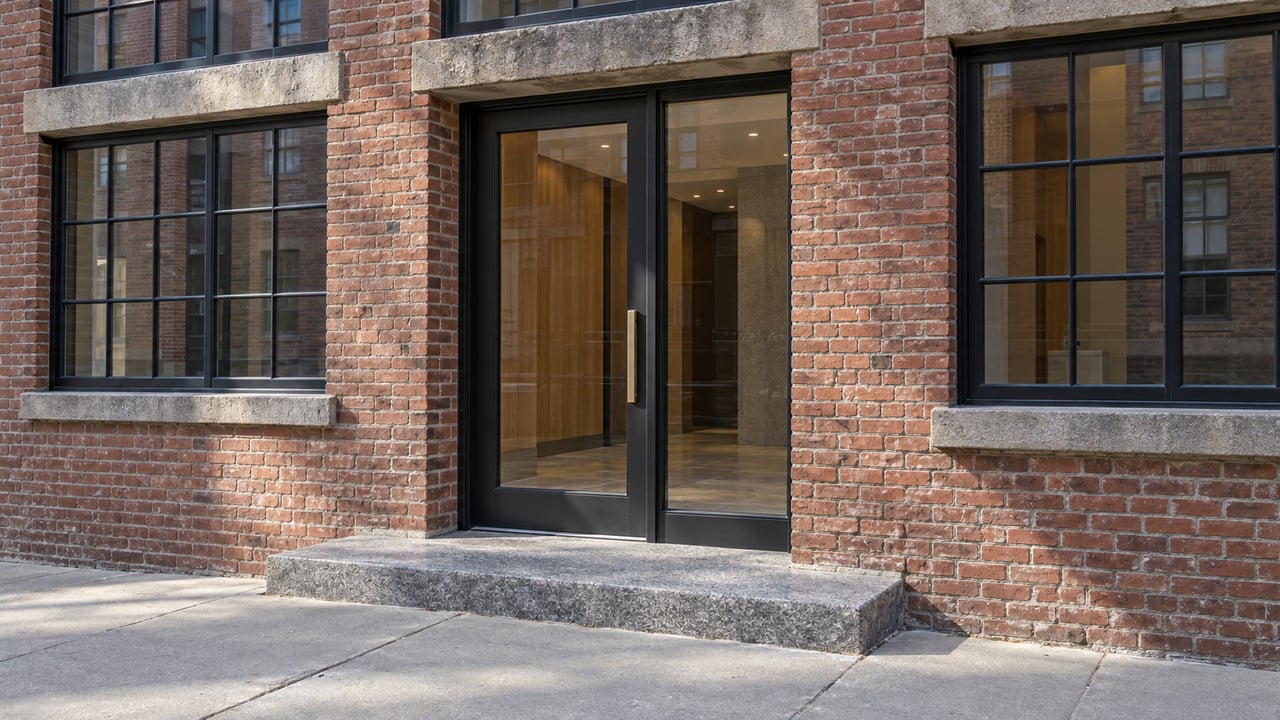
The Powerhouse Arts District takes its name from the Jersey City Powerhouse, a former rail power station that anchored the neighborhood's shift from warehouses to artist live-work lofts starting in the late 1990s. Converted loft buildings with exposed brick and high ceilings still sit alongside newer glass-and-steel towers built on adjacent lots, so two buildings on the same block can feel decades apart in character. Buyers drawn to loft-style square footage should confirm which type a specific building is before assuming the whole district reads the same way.
Local Tip: A rowhouse listing in Van Vorst Park or Paulus Hook often looks similar on paper to one in Harsimus Cove, but the historic district designation can mean stricter exterior renovation rules. Buyers planning to modify a facade should check the local historic preservation guidelines before writing an offer, not after.
How the Commute Actually Changes From One Block to the Next
The waterfront's PATH stations do not all go to the same part of Manhattan, and that single fact matters more to daily life than almost anything else on this list. Exchange Place sits on the line that runs one stop to the World Trade Center, making it the fastest route to Downtown Manhattan. Newport, by contrast, sits on the line that runs to 33rd Street, putting Midtown one seat away instead. A buyer who works in the Financial District and picks Newport, or a Midtown employee who picks Exchange Place, adds an unnecessary transfer to every single commute.
Beyond the PATH, three other options shape how residents actually get around:
- PATH train: Stations at Grove Street, Exchange Place, and Newport connect directly to Manhattan without a transfer, running roughly 24 hours a day.
- Hudson-Bergen Light Rail: Stops throughout Paulus Hook, Exchange Place, Harsimus Cove, and Newport link the waterfront pockets to each other and extend south to Liberty State Park and north to Hoboken.
- NY Waterway ferry: The Paulus Hook terminal runs direct service to several Manhattan piers, a slower but more scenic alternative to the PATH that some residents use for the return trip home rather than the morning rush.
Ferry timing is worth flagging on its own. Service runs on a wider gap between boats than the PATH does, especially midday and on weekends, so residents who rely on it for a hard-stop meeting tend to build in a buffer that PATH commuters do not need.
Is a Car Even Necessary on the Jersey City Waterfront?
For most residents of these six pockets, no, and that is by design rather than accident. The combination of PATH, light rail, ferry service, and the protected bike lanes along the waterfront lets residents run errands, commute, and reach most of Hudson County without a vehicle. Grocery delivery and ground-floor retail fill in the rest, since Newport, Exchange Place, and Paulus Hook all have supermarkets, pharmacies, and everyday retail built into their base floors. The exception is buyers who regularly drive to see family outside the county or who need a car for work; those buyers should weigh Van Vorst Park or Harsimus Cove, where street parking exists, over Newport or Exchange Place, where garage parking usually adds a separate monthly cost.
Which Pocket Locals Pick for Daily Errands
Locals gravitate toward whichever pocket puts a full grocery store and a pharmacy within a five-minute walk, and that is not evenly distributed across the waterfront. Newport's retail corridor and mall give it the deepest bench of everyday options, while Paulus Hook and Van Vorst Park lean on a smaller cluster of independent shops and restaurants along Washington and Grove Streets. Residents of Harsimus Cove and the Powerhouse Arts District often split the difference, walking north toward Newport for a big grocery run and staying local for coffee and dinner. None of this is a dealbreaker for daily life in any pocket, but it does mean a buyer who wants one-stop errands without a longer walk should prioritize proximity to Newport's retail base specifically, not the waterfront in general.
The Parks Divide Weekend Life More Than People Expect
Jersey City's three major waterfront green spaces do not serve the same crowd, and which one a resident defaults to says a lot about which pocket they live in. The Hudson River Waterfront Walkway runs the length of the shoreline and functions as the connective tissue between every pocket on this list, used for running, dog walking, and stroller commutes at every hour. Liberty State Park, reachable from Paulus Hook and Van Vorst Park by light rail or a longer walk, offers open lawns, Statue of Liberty views, and enough distance from downtown that it draws residents looking for a full outing rather than a quick lap. Newport Green sits closer to the high-rise towers and hosts more programmed activity, including seasonal outdoor movie nights, which makes it the default for Exchange Place and Newport residents who want a park experience without leaving their immediate blocks.
- Hudson River Waterfront Walkway: Runs the full shoreline, connecting every pocket for daily walking and running.
- Liberty State Park: A larger, more destination-style park favored by Paulus Hook and Van Vorst Park residents for weekend outings.
- Newport Green: A programmed, closer-to-home green space favored by Exchange Place and Newport residents.
Main Takeaway: The waterfront's parks are not interchangeable. Buyers who want a large, weekend-destination park should weight Paulus Hook or Van Vorst Park's proximity to Liberty State Park; buyers who want programmed events within a five-minute walk should weight Newport or Exchange Place instead.
Who Actually Fits Each Waterfront Pocket
Matching a buyer to a pocket comes down to three questions: does the buyer want a rowhouse or a tower, which part of Manhattan do they commute to, and how much weekend park time matters. Buyers who want a townhouse with character and don't mind a slightly longer commute tend to land in Van Vorst Park or Paulus Hook. Buyers optimizing purely for commute speed to Downtown Manhattan gravitate to Exchange Place, while Midtown commuters do better in Newport. Harsimus Cove and the Powerhouse Arts District suit buyers who want rowhouse or loft character at a more accessible price point without giving up light rail access. None of these are rigid rules, but they reflect how buyers who already live here describe their own routines.
Buyers comparing this decision to a similar one just across the river may find it useful to also look at condo and brownstone tradeoffs in Hoboken, since the housing-stock split there follows a similar rowhouse-versus-tower logic.
What the Condo Market Split Means for Waterfront Buyers Right Now
Pricing and inventory are not moving the same way across all six pockets, which is a separate issue from lifestyle fit but affects timing. High-rise inventory in Exchange Place and Newport tends to turn over differently than the smaller, slower-moving rowhouse market in Van Vorst Park and Paulus Hook, where a listing can sit for months simply because so few come up. Buyers weighing a rowhouse against a high-rise condo should read the breakdown of how Jersey City's condo market is actually splitting before assuming one part of the waterfront prices the same way as another.
For a broader look at how Jersey City compares to the county's other neighborhoods, the Jersey City neighborhood overview covers areas beyond the waterfront pockets detailed here, and the full buyers guide walks through financing and offer strategy for New Jersey purchases generally.
Choosing the right waterfront pocket is a research problem before it is a house-hunting problem, and getting it wrong means comparing listings that were never actually competing with each other. The Arrived Team works these six pockets block by block and can help narrow the search to the one that actually matches how a buyer plans to live day to day.