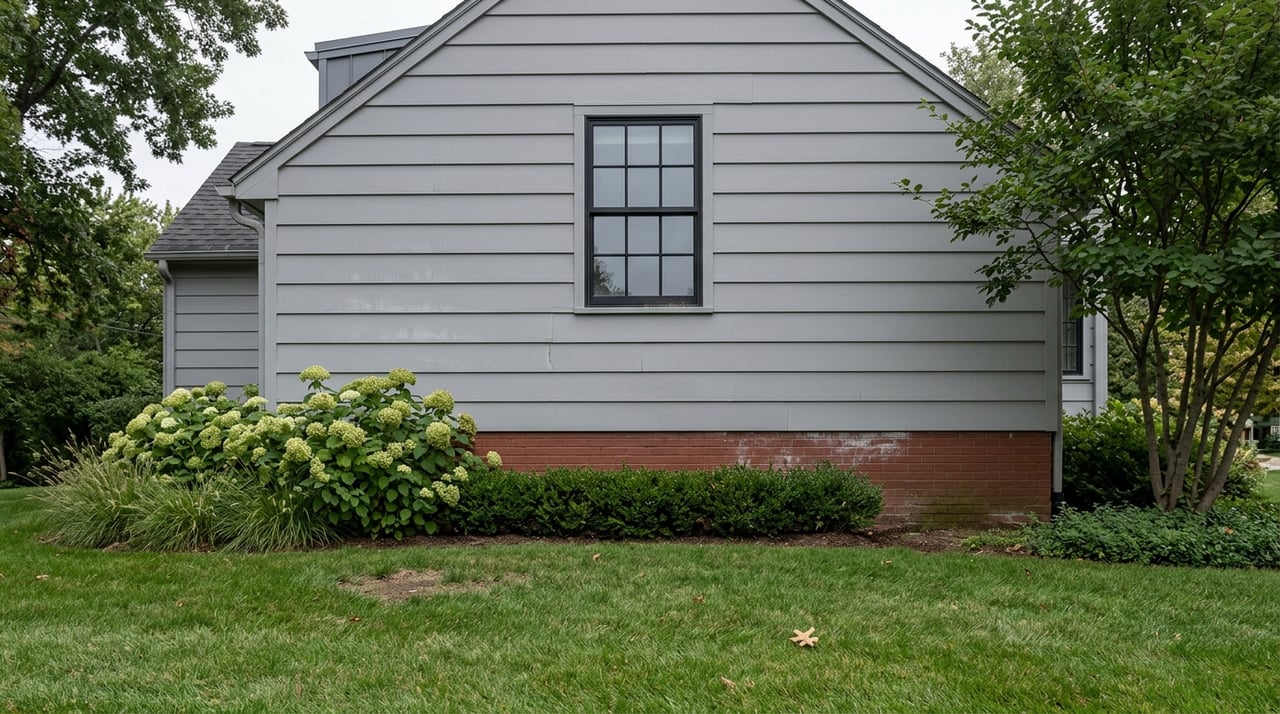
Here is how it usually goes. A buyer falls for a colonial on a quiet Englewood block, gets through inspection with a short punch list, and starts counting down to closing. Then the home inspector notes a capped pipe sticking out of the side yard, or a patch of grass that never quite grows in the same way as the rest of the lawn. The seller genuinely doesn't know what it is. Nobody in the house has used oil heat in decades. But the buyer's attorney has seen this before, and a tank sweep gets ordered during the attorney review period that follows a signed New Jersey contract. Now everyone is waiting on a technician with a metal detector, the closing date is soft, and the seller who had all the leverage a week ago has almost none.
That sequence is not rare in Englewood. It is closer to routine, and the reason has nothing to do with bad luck and everything to do with the age of the housing stock.
Why This Keeps Showing Up in Englewood Contracts
Englewood's housing was built in two big waves that both predate the era when natural gas became the default heating fuel. Roughly 30 percent of the city's homes went up during the 1940s through 1960s, the cape and ranch boom that followed the GI Bill. Another 26 percent predate 1939. Add those together and well over half of Englewood's housing stock was built before gas heat was standard, which means well over half the city's single-family homes were originally heated with oil, delivered from a tank that was often buried in the yard.
This is not unique to Englewood, but Englewood is squarely in the pattern. Bergen County real estate attorneys who handle closings across the county point to Englewood by name, alongside Leonia, Tenafly, and Teaneck, as towns where pre-1970s oil heat was the rule rather than the exception, and where the tank did not always leave the property when the furnace did. A homeowner converts to gas in 1985, the oil furnace goes to the curb, and the underground tank stays exactly where it was poured, quietly aging under a lawn that has since been reseeded a dozen times.
It is worth being specific about where this risk actually concentrates. Englewood's downtown carries a large share of condos and large apartment buildings, and that stock generally isn't exposed to this particular problem, since heating is handled at the building level. The exposure sits almost entirely in the single-family and two-family segment, and it does not spare the top of the market. East Hill's preserved Victorian and early twentieth-century homes, the ones the Englewood Historical Society has spent decades protecting, are exactly the vintage most likely to have started life on oil heat.
What a Tank Sweep Actually Finds
A tank sweep is not a guess. A licensed contractor walks the property with metal detection equipment and looks for a specific set of physical clues: fill pipes or vent pipes still poking through the foundation or the lawn, a depression in the yard where soil has settled over a buried tank, patched areas where old fuel lines used to run, or a section of grass or landscaping that dies back in a pattern that suggests oil has leached into the soil below.
If the initial sweep raises a flag, the next step is either ground-penetrating radar to confirm the size and shape of whatever is down there, or an exploratory dig, where the contractor hand-excavates the suspicious area until the object is identified. According to NJ Closing Guide, both of those steps require the seller's permission, since the buyer's inspector is now proposing to dig up someone else's yard. That permission conversation, happening mid-contract with a closing date already on the calendar, is exactly the moment where a deal starts to wobble.
New Jersey Doesn't Require Removal. It Requires Something Harder: Disclosure
There is a common misconception that New Jersey law forces sellers to remove an underground tank before closing. It doesn't. TankRemovers.com says there is no statute that flatly requires removal. The Seller's Property Condition Disclosure Statement specifically asks about oil tanks, active, inactive, buried, or previously removed, according to Rybar Law Group.
That distinction matters more than it sounds like it should. Because there's no removal mandate, some sellers assume silence is a safe option if they're not sure what's under the yard. It isn't. Oil Tank Removal NJ reports that New Jersey courts have held sellers responsible for undisclosed tanks discovered after closing, even when the seller claims they didn't know, because the standard isn't just what you knew, it's what a reasonable seller in your position should have investigated. A fill pipe sitting in plain sight in the side yard is evidence, whether or not anyone ever mentioned it out loud.
That is what turns a heating question into a title question. The tank itself is a fixable physical problem. The failure to disclose it, honestly or otherwise, is a legal one that follows the seller past the closing table.
What It Actually Costs, and What It Costs to Wait
Current 2026 contractor pricing across the state is fairly consistent: a clean underground removal, no contamination found, typically runs $1,500 to $4,000, covering permits, excavation, soil sampling, and backfill. That range holds whether the home is in Englewood or anywhere else with comparable soil conditions.
The number that changes everything is what happens if the soil comes back contaminated. Remediation starts around $8,000 once a leak is confirmed and climbs from there depending on how much soil is affected and whether groundwater is involved. A seller who orders a sweep before listing controls which of those two numbers they're dealing with, and on what timeline. A seller who finds out during attorney review has less time to assess the problem and its costs before closing.
The tank rarely kills a well-prepared deal. It kills the ones where the seller finds out the same week the buyer does.
The State Fund Is Not a Backup Plan
New Jersey does operate a reimbursement program for homeowners dealing with a leaking residential oil tank, the Petroleum Underground Storage Tank Remediation, Upgrade and Closure Fund, run jointly by the NJDEP and the New Jersey Economic Development Authority. It's a real resource, and it exists for a reason. But the state's own program page currently lists roughly a one-year wait on new applications before they're even reviewed, because of how many homeowners are already in the queue. A transaction with a thirty to forty-five day closing window cannot wait on a program with a one-year backlog. If contamination shows up mid-contract, the fund is not the thing that saves the deal. Speed and cash on hand are.
The Move That Actually Protects Your Price
The pattern that shows up again and again is simple: sellers who order a tank sweep before listing keep control of the price, the contractor, and the calendar. Sellers who wait for a buyer's inspector to find it are negotiating after the leverage has already shifted. For a home built before 1970, in a neighborhood where that describes more than half the housing stock, a pre-listing sweep is not an extra step. It's the step that keeps a strong offer from turning into a renegotiated one three weeks before closing.
This is exactly the kind of preparation that programs like Compass Concierge exist for, covering the cost of pre-sale work upfront so a seller isn't choosing between fixing a problem and keeping cash on hand through the sale. Knowing what's under the yard before a buyer's attorney does is not a defensive move. It's pricing strategy applied to the one variable most sellers never think to check.
FAQ
Does every older Englewood home have a buried oil tank? No. Many homes converted to gas decades ago and had their tanks properly removed at the time, with documentation to prove it. The issue is that a large share of the city's housing was built during the oil-heat era, which means the odds of an undocumented tank are meaningfully higher here than in a neighborhood built primarily after 1990.
Am I legally required to remove a tank before I sell? As TankRemovers.com says above, New Jersey has no statute requiring removal.
I converted to gas years ago and have no idea what happened to the old tank. What do I do? This is common, and it's worth resolving before you list rather than during a contract. A tank sweep can identify signs of a buried tank; if it raises a flag, further investigation may be needed. If nothing is found, that gives you useful information to put in front of a buyer.
Will a buyer's lender approve a mortgage if a tank is found? Stewart Environmental notes that many conventional lenders will not close on a property with a known, unaddressed underground tank. That is part of why removal or documented closure tends to happen before closing rather than after, regardless of what state law technically requires.
Every one of these steps is easier to manage before a home hits the market than after a buyer's attorney finds the question first. If you're weighing a sale of an older Englewood property and want a straight answer on what your specific address might be carrying, The Arrived Team Compass can walk the timeline with you before it becomes someone else's leverage. Work With Us.
This article is general information, not legal, tax or financial advice. Consult a qualified professional about your situation.