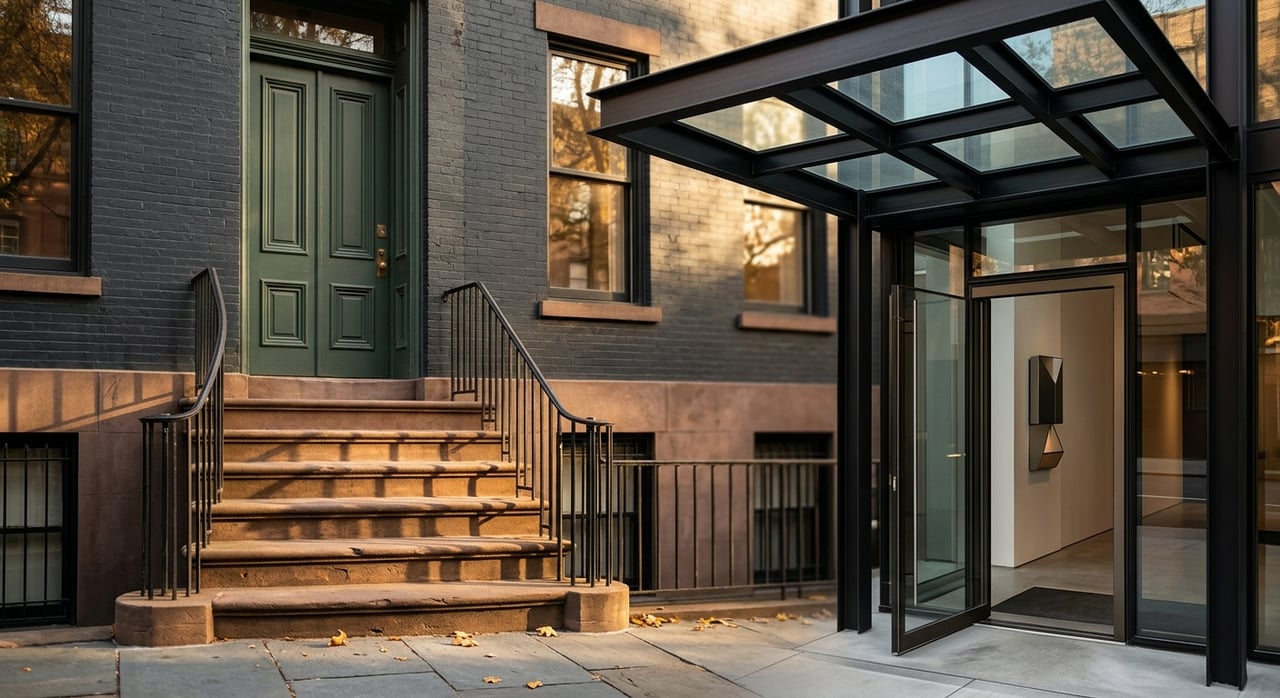
Choosing between a condo and a brownstone in Hoboken comes down to four things a buyer can pin down before writing an offer: monthly carrying cost, who controls exterior changes, exposure to flood risk, and how each property type resells. A condo trades some autonomy for predictable monthly costs and someone else handling the roof; a brownstone trades that predictability for full control and full liability. Getting this decision right in Hoboken means running real numbers against a buyer's own risk tolerance, not picking based on which one photographs better.
Hoboken's housing stock skews heavily toward these two formats because there's almost no other option in a mile-square city built out more than a century ago. Inventory stays tight, and homes here have recently sold at roughly 101.6% of list price with an average of four competing offers, per Redfin's citywide data, which punishes buyers who haven't already decided which format they can afford to own long-term.
Key Takeaways
- Hoboken's citywide median sale price has held in the $970,000–$975,000 range recently, with prices roughly flat year over year after a sharp run-up in prior years.
- Condo fees typically run $300–$600 a month in smaller walk-ups and $600–$1,200-plus in elevator or amenity buildings, and they cover exterior maintenance and building insurance.
- Brownstone owners fund every repair themselves, from roof replacement to boiler failure, but keep full authority over the property (subject to city and historic rules).
- Anything in one of Hoboken's local historic districts, including much of Uptown and Doctor's Row, needs Historic Preservation Commission approval before exterior work starts.
- Flood insurance depends on FEMA zone and mortgage type, not on whether the property is a condo or a brownstone, and southwest Hoboken carries meaningfully more exposure than the high ground near Castle Point.
What Condos and Brownstones Actually Cost in Hoboken Right Now
The sale price is only the entry fee; the real comparison happens in what each property costs to hold every month after closing. Hoboken's median sale price has recently sat around $970,000 to $975,000, essentially flat year over year after a period of sharp appreciation the team has covered in detail elsewhere. One-family brownstones on the market have ranged from roughly $675,000 for a smaller or unrenovated property up to $4.6 million for a fully restored multi-family building, so "brownstone" covers a far wider price band than "condo" does.
Homes also move fast, with a median of just 31 days on market, so buyers rarely get a slow, side-by-side comparison once they've toured a property type they like. Deciding on condo versus brownstone before touring beats deciding during a bidding war.
Monthly Carrying Costs: HOA Fees vs. Self-Funded Upkeep
Condo fees in Hoboken generally fall into two tiers. Walk-up buildings without elevators or amenities tend to run $300 to $600 a month, while elevator buildings with doormen, gyms, or roof decks often run $600 to $1,200 or more. Those fees typically fund building insurance, trash removal, common-area upkeep, and exterior maintenance, buying predictability in exchange for no say over the special assessment when the roof finally needs replacing.
Brownstone owners skip the monthly fee but fund every repair themselves, from roof work to a failed boiler, on their own timeline. Budgeting $0 a month for "building maintenance" is the single most common mistake the team sees among first-time brownstone buyers, since a 100-plus-year-old building rarely goes a full year without needing something.
Local Tip: Ask a brownstone seller for actual repair invoices from the last five years, not just a general "everything's been updated." Vague answers on boiler age or roof condition usually mean a five-figure surprise is still ahead for the next owner.
Condo vs. Brownstone in Hoboken: The Trade-Offs Side by Side
Factor | Condo | Brownstone |
|---|---|---|
Typical monthly cost beyond mortgage | $300–$1,200+ HOA fee, set by the building | Variable, owner-funded as issues arise |
Who handles exterior repairs | The building/HOA | The owner directly |
Approval needed for exterior changes | Building board sign-off | City zoning, and Historic Preservation Commission if in a historic district |
Flood insurance | Often carried at the building/master policy level, unit owners may still need HO-6 coverage | Owner buys and manages the full policy |
What drives resale value | HOA reserve health, no pending litigation, no looming special assessments | Documented system updates: roof, boiler, electrical, foundation |
Best fit | Buyers who travel often or want no exterior responsibility | Buyers who want full control and can self-manage upkeep |
Main Takeaway: A condo shifts risk to the building and its reserve fund; a brownstone keeps all the risk, and all the control, with the individual owner.
How Hoboken's Historic Districts Complicate Brownstone Ownership
Owning a brownstone in one of Hoboken's local historic districts means the city, not just the owner, has a say in how the exterior looks. Large stretches of Uptown, including the 1200 blocks of Bloomfield and Garden Streets, sit inside a designated historic district, as does the 900 block of Washington Street's east side, known locally as Doctor's Row for the physicians who once practiced there.
What Triggers a Certificate of Appropriateness in Hoboken?
Any exterior work on a designated property needs Historic Preservation Commission review before it starts, whether or not it also needs a building permit. That covers window and door replacement, cornice repair, facade repointing, and stoop or ironwork changes, though minor work sometimes qualifies for a faster Certificate of No Effect instead of a full hearing.
A full Certificate of Appropriateness typically issues within ten days once the commission approves an application, but getting on the calendar and preparing a compliant submission takes longer. Buyers eyeing a brownstone that needs exterior work, not just interior renovation, should build that review timeline into their financing and moving plans.
Local Tip: Castle Point, the elevated pocket of detached homes near the Stevens Institute campus, includes some properties outside the strictest historic overlay. It's worth checking a specific address against the city's historic district map before assuming every uptown brownstone carries the same approval burden.
Is Flood Insurance Required for a Hoboken Condo or Brownstone?
Flood insurance requirements depend on the property's FEMA flood zone and mortgage type, not on whether it's a condo or a brownstone. High-risk AE or VE zones require mandatory coverage to close with a federally backed mortgage, while the moderate-risk X zone allows skipping it, though that's a real gamble given that nationally, close to a third of flood claims come from outside the officially high-risk zones.
Ownership structure changes who buys that coverage. A condo building often carries a master flood policy for the structure, so an owner may only need a smaller HO-6 policy for their unit's contents. A brownstone owner insures the entire structure alone, usually at a materially higher premium for the same flood zone.
Which Streets Carry the Most Flood Risk
Southwest Hoboken sits closest to sea level and has historically flooded hardest during heavy rain, a legacy of a 19th-century sewer system never built for today's storm volumes. Streets that show up repeatedly in the city's own flood-prone listings include Willow Avenue, Clinton Street, Observer Highway, and stretches of 1st, 2nd, and 14th Streets. Higher ground near Castle Point and much of uptown carries meaningfully less exposure, though boundaries shift block by block, so a specific address always needs its own FEMA lookup rather than a neighborhood-level guess.
The city keeps investing in reducing this risk rather than eliminating it, deploying nearly 10,000 linear feet of flood walls and 28 floodgates through the Rebuild by Design project, plus an automated warning system that closes dangerous intersections during storms. None of that removes the need for insurance on a property in a mapped flood zone.
How Hoboken Bills Property Taxes, and Why the Timing Matters to Both Owners
New Jersey bills property taxes quarterly, with statewide due dates on February 1, May 1, August 1, and November 1, each carrying a standard grace period before interest applies. That schedule applies identically to a condo unit or a full brownstone; what differs is the assessed value each owner is taxed against, since a brownstone typically carries a higher total assessment than a single unit inside a larger building on the same block.
Hoboken's own billing cycle doesn't always run on autopilot, either. In 2026, the city adopted an 11.5% tax levy increase and pushed the third-quarter deadline out to August 31, well past the standard grace period, because the municipal budget process ran long. Buyers closing mid-year should ask for the seller's most current adjusted bill rather than an earlier estimated one, since a budget delay can mean a noticeably larger true-up bill arrives later in the year.
Who Actually Fits a Condo Versus a Brownstone in Hoboken?
The right property type comes down to how much unscheduled time and cash a buyer wants to hold in reserve, not how the building looks from the sidewalk. Buyers with demanding jobs or frequent travel, or who'd rather spend free weekends at Pier A concerts than coordinating a roofer, tend to do better with a condo's predictable fee. The team has covered what fills Hoboken's calendar for buyers weighing exactly that lifestyle tradeoff.
Buyers who want full control over renovations, or plan to add rental income from a lower unit, tend to do better with a brownstone, provided they've budgeted realistically for upkeep. Resale differs too: a condo's future value leans on the building's reserve health and the absence of pending litigation, while a brownstone's value leans on documented, permitted system updates a buyer can verify.
Questions Worth Asking Before Writing an Offer
- For a condo: What's the current reserve fund balance, and has the board discussed upcoming special assessments?
- For a brownstone: When were the roof, boiler, and electrical panel last replaced, and is there permit documentation?
- For either: What FEMA flood zone is this address in, and what would coverage cost with an elevation certificate?
- For either: Is the exterior inside a historic district, and does planned work need Historic Preservation Commission sign-off?
Buyers still sorting through these tradeoffs can start with the team's buyers guide, and current owners weighing whether to sell one before buying the other can get a baseline with a free home valuation.
When Jersey City's Waterfront Enters the Conversation
Some buyers who start out comparing Hoboken condos and brownstones widen the search once they see how tight Hoboken's inventory runs. Jersey City's waterfront offers a similar condo-heavy, walkable lifestyle, often in newer buildings with their own flood and tax profiles. The team's breakdown of everyday life along Jersey City's waterfront is worth a read for anyone treating that as a real option. Either way, buyers can browse current listings rather than working from stale search results.
The right choice comes down to which set of costs and control a buyer actually wants to carry for the next decade, not which building looks better on a Sunday walk. The Arrived Team walks Hoboken buyers through that math every week, from reading an HOA's financials to lining up a historic district approval, and reaching out directly is the fastest way to get a straight answer on a specific address.